Dry Fly Fishing Bariloche
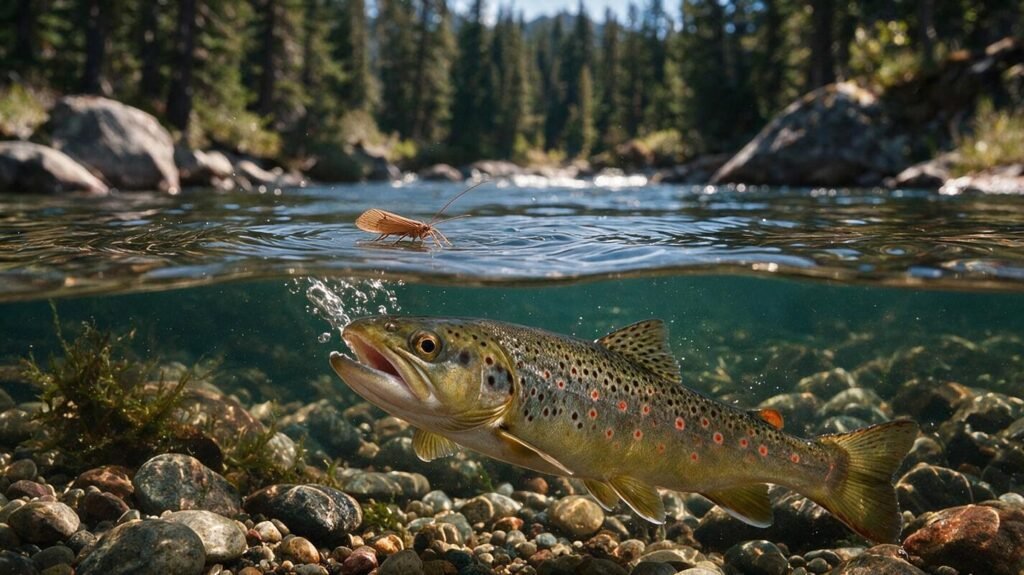
A Local Guide to Trout Fishing in Patagonia If you are looking for dry fly fishing in Bariloche, there is one thing I would tell you before you start planning your trip: don’t come to Patagonia only thinking about the fish. Come prepared to read the river. My name is Emanuel Medina, and I am the owner of a fly-fishing company in Argentina and a fly-fishing guide. I have been part of the Patagonian fly fishing world for many seasons, and I am proud to be one of the longest-established guides working in this region. Over the years, I have learned that some of the most memorable days of fly fishing in Bariloche, Argentina are not necessarily the days when you catch the biggest trout. They are the days when you see a few Caddis coming off the water, find a trout feeding in the right place, make the right cast, and watch the fish take your dry fly from the surface. That is what makes Bariloche fishing so special. Bariloche offers a remarkable variety of rivers, lakes, landscapes, and fishing situations. But if your goal is specifically to experience dry fly fishing in Patagonia, I pay particular attention to the beginning of the season, especially November and December. And if I had to choose one river to start with, the Manso River would be very high on my list. Why Bariloche Is Special for Dry Fly Fishing There are many reasons anglers travel to Argentina for trout fishing, but Bariloche is particularly interesting because you can experience very different types of water within the same general region. For me, good Bariloche Argentina fishing is not simply about having access to trout. It is about having different options when conditions change. One river might be fishing well with a dry fly while another is better suited to a different technique. Water levels, weather, insect activity, light, wind, and fishing pressure can all influence what I decide to do on a particular day. This is why I don’t like to approach Patagonia with a rigid plan. When I guide an angler, I want to look at the water first. Where are the trout holding? Are they actively feeding? Are there insects on the surface? Are the fish looking up? Is the current allowing a good drift? These questions are much more important than simply deciding in advance that we are going to fish one particular fly. That flexibility is one of the great advantages of planning Bariloche fishing trips with someone who knows the rivers and understands how quickly conditions can change. The Best Time for Dry Fly Fishing in Bariloche For anglers specifically interested in dry fly fishing in Bariloche, I particularly like the beginning of the season. In my experience, November and December can offer excellent opportunities, especially when Caddis are abundant. I pay particular attention to the last week of November and the first week of December. This period can be very interesting for another reason: it is considered low season. That means fewer anglers on the rivers and, depending on the program and availability, potentially more attractive prices than during the busiest periods. For me, that combination is difficult to ignore. You can have active insects, trout looking toward the surface, less pressure on the rivers, and a quieter experience in Patagonia. November and December: The Caddis Window Caddis are one of the insects I pay close attention to when guiding during this part of the season. When Caddis are abundant, the river can change dramatically. Suddenly, the surface becomes much more interesting. You start looking for subtle rises, movement along the banks, and trout positioning themselves where they can intercept food. This is when I want to be prepared. One of the mistakes I see anglers make is carrying only one Caddis pattern. I prefer having two or three options. You can have a look at www.patagoniatroutandfly.com, my website with fly tying patterns. One of my favorite patterns is the Goddard Caddis. It is a pattern I have found extremely useful, but I don’t believe in relying on one fly all day simply because it worked yesterday. The river decides. The trout decide. And the angler has to pay attention. Why Early Season Can Mean Fewer Anglers One of the things I enjoy about early-season Bariloche fishing is the atmosphere. You can have an excellent fishing day without feeling that you are competing with dozens of other anglers. For someone coming all the way to Patagonia, that matters. You are not only traveling for a trout. You are traveling for the experience of standing beside a Patagonian river, watching the water, making a careful cast, and spending hours away from the noise of everyday life. That is one reason I often recommend that anglers consider November and December when planning their fly fishing Bariloche Argentina adventure. What Changes Around January The beginning of January can still offer good fishing opportunities, but my preference for the specific Caddis-focused dry fly experience described here is the earlier part of the season. For the Manso, I particularly like the period from November through December and into approximately January 5. The exact conditions will always depend on the river and the season, so I prefer to plan around what the water is doing rather than promise a particular hatch on a particular date. The Manso River: My Favorite Water for Dry Fly Fishing If you ask me about a river that I really like for dry fly fishing, I will talk to you about the Manso River. The Manso is an incredible river for dry fly fishing. It is smaller and, in my experience, can be easier to approach than some larger Patagonian rivers. That makes it especially enjoyable when the objective is to cast a dry fly accurately, control the line, and watch what happens on the surface. For an angler interested in Bariloche fishing trips, the Manso can be a very different experience from simply spending a
Wooden Bathtub at Our Glamping Lodge in Bariloche
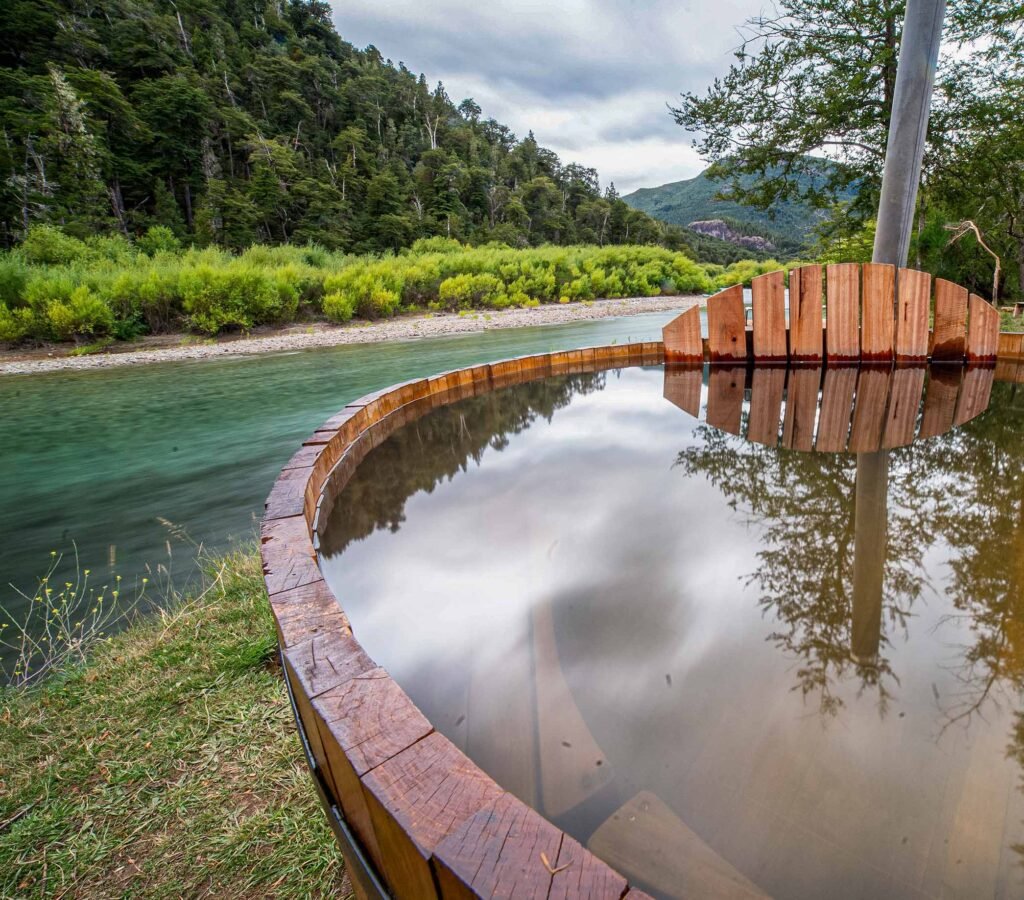
The Best Glamping Experience in Patagonia If you’re looking for the best accommodation in Bariloche with an outdoor hot tub in a Japanese or Nordic style, you’re probably looking for more than just a place to stay. Do you want an experience that combines nature, comfort, and fly fishing, and lets you experience the authentic Patagonia? That’s precisely what our Glamping Lodge in Bariloche offers. It’s a place for anglers and their companions, designed for those seeking high-end comfort without losing the essence of nature. Located just 1 hour and 20 minutes from Bariloche Airport, the journey itself becomes part of the adventure. You’ll be picked up upon arrival and taken to a secluded corner of the Patagonian mountains. Hidden among the mountains, surrounded by the breathtaking landscapes of Nahuel Huapi National Park, our privileged location provides excellent service that you won’t forget. Inauguration of the Hot Tub As a first in this beautiful location, our Trout Bariloche team, after much research, hard work, and dedication, inaugurated the innovative outdoor hot tub made of cypress wood. Inspired by ancient cultures such as Japanese and Nordic, the wooden tub offers a moment of well-being and relaxation, both physically and mentally. We provide this space after an active day to help you unwind. The combination of relaxing in warm water and observing the surrounding nature creates a truly unique experience. What could be better than feeling satisfied after a successful day of fishing and arriving at the glamping lodge, with the staff waiting for you for a relaxing bath and snacks such as homemade cheeses with freshly baked bread, accompanied by grapes, olives, and a rich wine selected for you? Inspiration, Action, and a Dream Fulfilled After much study and research, this beautiful structure was built from cypress wood, a native tree of the Andean forests region. Cypress is especially lightweight, strong, versatile, and of excellent quality for outdoor use, thanks to its resistance to humidity and insects. It’s perfect for this project. It’s designed with interlocking pieces; that is, each board is fitted and held in place by the metal band that runs around the circumference. It’s worth noting that it has Nordic and Japanese origins; that’s why it’s a pleasure to replicate this piece so you can enjoy it! We invite you to book your stay at Trout Bariloche in our Glamping Lodge; you’ll be amazed! CONTACT US!
Fly Fishing Bariloche in October – Nahuel Huapi National Park
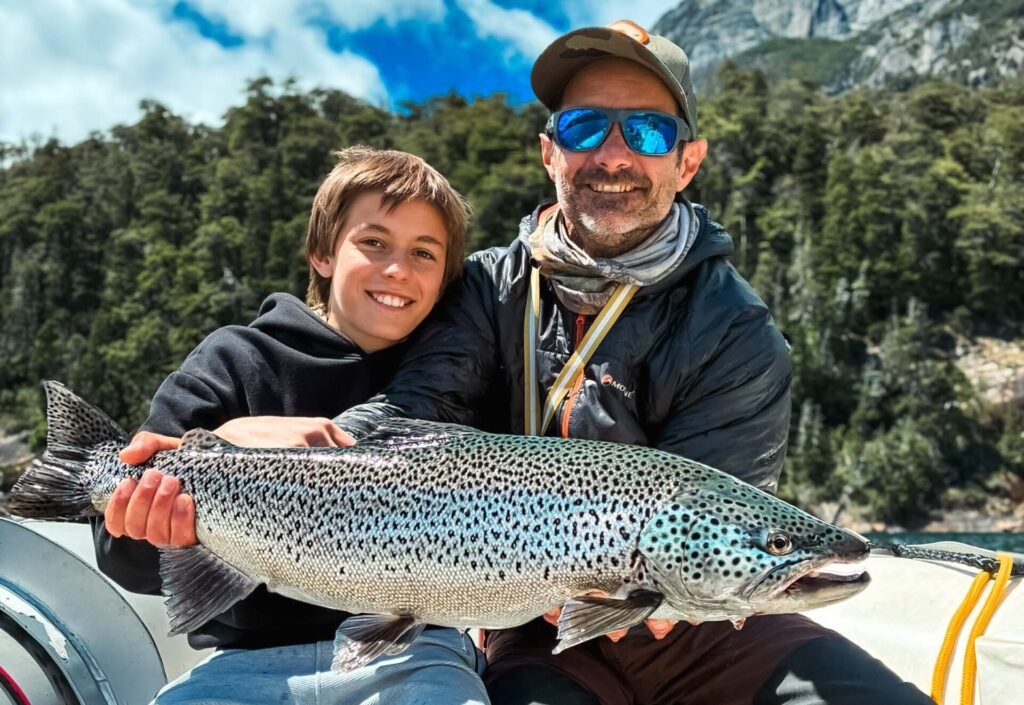
Crystal-clear waters, safe & comfortable boats, world-class guides, and trout up to 7–8 kg waiting for your fly! October in Patagonia marks the true beginning of the season, and nowhere is this more evident than on the legendary waters of Lake Nahuel Huapi and its tributaries. This is when anglers can witness why Argentina is home to some of the most remarkable fly fishing on the planet. Nahuel Huapi is the only fishery inside a National Park that remains open in October, offering a rare chance to target trophy-sized, silver migratory browns and rainbows. These powerful fish—many bound later for the Limay River—provide explosive action and a level of quality that our guides say cannot be matched at any other time of year. Our operation combines the best of Lake Nahuel Huapi, Lake Moreno, and the mouths of small spring creeks, creating an unrivaled program that lets anglers fish a variety of stunning locations over the course of a week. The consistency, size, and strength of these trout make October one of the most coveted times to be here. To ensure comfort and safety, we use large, stable, lake-worthy boats, purpose-built for these waters. Our team of licensed professional guides, along with handpicked accommodations near prime fishing areas, guarantees a seamless experience. You won’t be wasting time on long drives—just fishing, relaxing, and soaking in the spectacular scenery. Picture yourself casting into crystal-clear Patagonian waters, surrounded by snowcapped peaks, as a massive silver trout—seven or even eight kilos—charges from the depths to crush your fly. October is short, but unforgettable. Join us and see for yourself why this is one of the most extraordinary fly fishing experiences in all of South America. CONTACT US!
Top 10 Flies in Patagonia Argentina
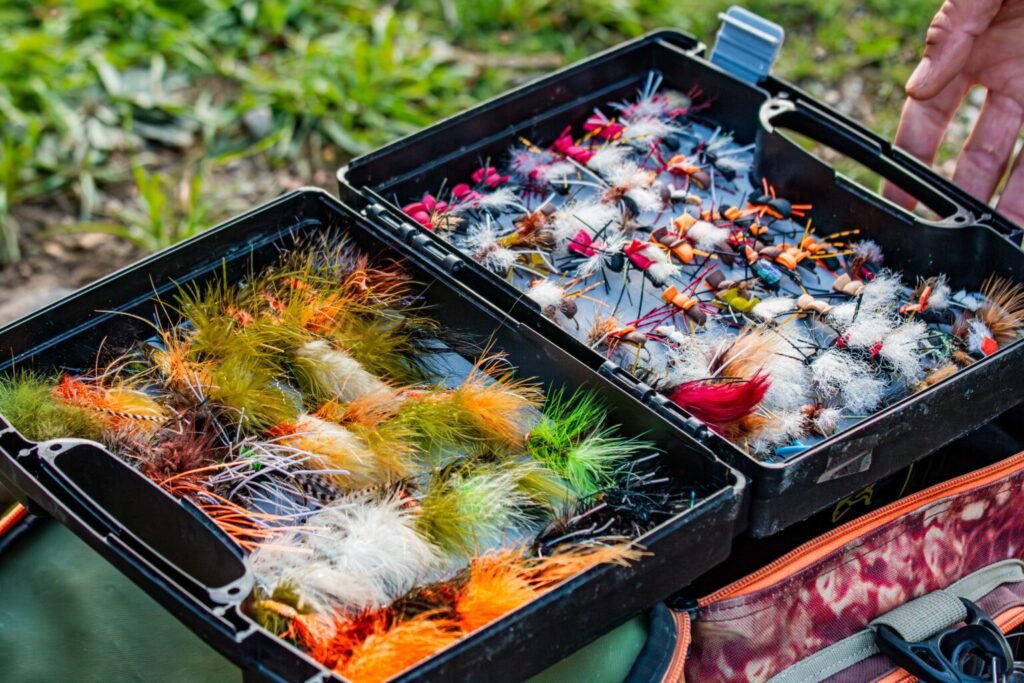
Fly Fishing in Patagonia: Flies to Master Rivers and Lakes When it comes to fly fishing in South America, Argentine Patagonia offers world-class opportunities to catch trophy brown and rainbow trout in stunning surroundings. But success on these waters is all about arriving with the right flies, understanding the river’s behavior, and assembling the right gear. After many seasons of casting dry flies, droppers, and streamers on these rivers, from wading to drifting, I’ve learned that the key is finding the correct pattern for the moment. In this guide, I’ll share a list of 10 flies for fishing in Patagonia. Top Dry Flies for Patagonia: Chubby Chernobyl, Fat Albert, and Elk Hair Caddis Nothing beats watching a hefty trout explode on a dry fly. In Patagonia fly fishing, these three patterns are must-haves: 1. Chubby Chernobyl An obvious, versatile fly that imitates a hopper, beetle, or just draws attention. 2. Fat Albert This big-bodied floater shines in faster water or when fishing from a drift boat. 3. Elk Hair Caddis A classic, ideal for evening caddis hatches or spooky fish in clear water. I remember one dusk session on the Manso where a size 14 Elk Hair Caddis produced five strikes in under 20 minutes — just softly drifting it under the willows. Patagonia Mayfly Essentials: 4. The Parachute Adams Although big hatches aren’t always standard in summer, you’ll still see enough mayflies to justify carrying some technical dries. Nothing beats the Parachute Adams for general-purpose success. On still mornings, with 5X tippet and a soft presentation, the Parachute Adams has consistently fooled picky fish in the Limay’s clear tailouts. Must-Have Nymphs: Pheasant Tail and Copper John While dries get the glory, much of the real action in fly fishing Patagonia happens subsurface — especially in deep runs or midday lulls. These two nymphs have proven themselves over and over: 5. Pheasant Tail Nymph (with bead head) 6. Copper John (green or red) I’ve had days when 70% of the fish came on the dropper, even with visible surface activity—the best combo: a Fat Albert with a red Copper John about 60 cm below. Streamers That Get It Done: Woolly Bugger, Muddler Minnow, Zonker & Bunny Muddler Patagonian trout, huge browns, love to hunt. When the sun dips and the wind dies, streamers become your secret weapon. 7. Woolly Bugger (conehead) 8. Muddler Minnow 9. Zonker 10. Conehead Bunny Muddler (black) One evening near a Limay bridge, I landed a 3+ kg brown trout on a black Bunny Muddler — last cast of the day. Always swing that streamer one more time. Conclusion: Experience + Flies = Patagonian Success Fly fishing in Patagonia is more than just fishing — it’s an immersion in nature, timing, and precision. With the right flies, sharp technique, and an understanding of the river’s mood, every cast becomes a shot at a dream trout. Having a tested Top 10 fly list, knowing when to swing a streamer or drift a dry-dropper, and matching your gear to the river gives you an undeniable edge. And remember: in Patagonia, your next cast might just hook the fish of a lifetime, a streamer, or let lure fishing drift, and adapting your gear to the river gives you an undeniable advantage. Contact Us to Learn More About Our Classes and Courses!
Incredible Experience: Fly Fishing in Bariloche
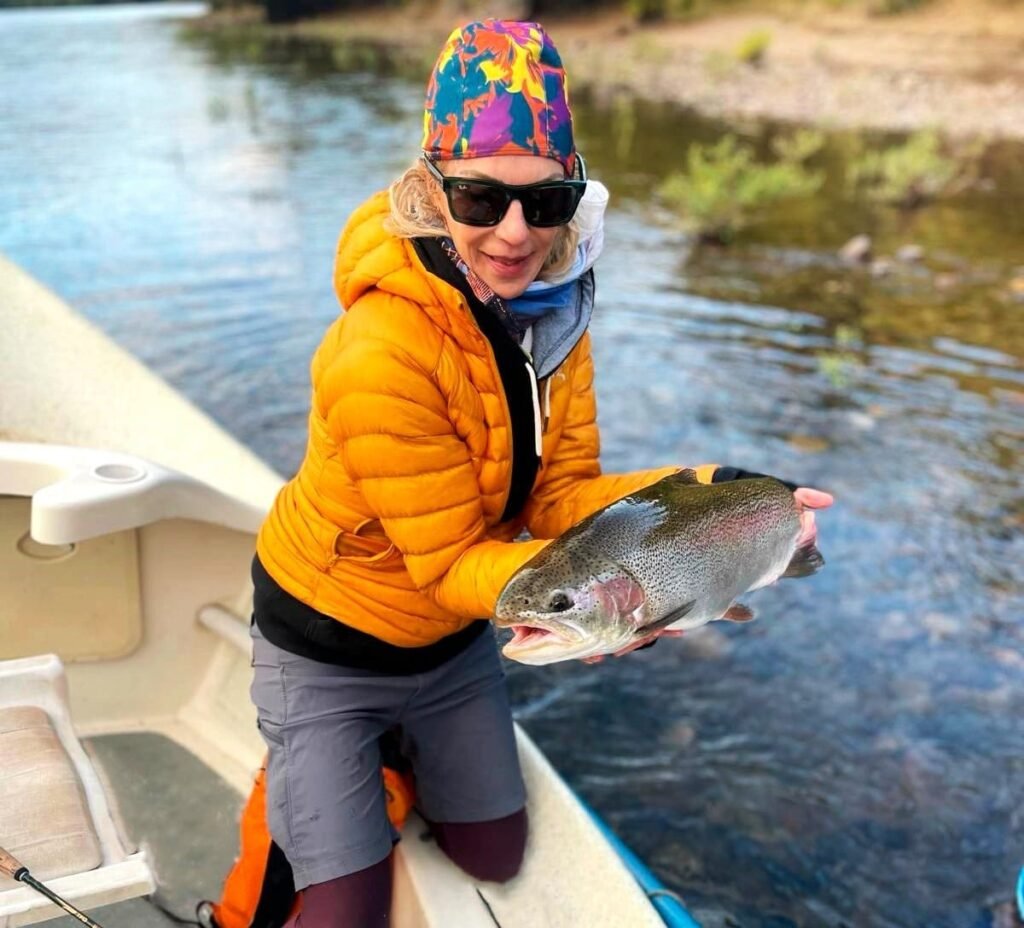
Review From an Excellent Trout Bariloche Customer The adventurer and fisherman Silvia, together with her husband Peter, has been traveling to the corners of Argentina for more than two years, and they got a great surprise when they went fly fishing in the rivers in the south of our country with Trout Bariloche. We’re thrilled to share this story that highlights the very essence of Bariloche fly fishing. We received a review from an experienced customer that left us very excited and happy. This is Silvia, who, together with her husband Peter, has been traveling our country for more than two years. They have decided to come to Bariloche to experience fly-fishing with us, which makes us feel fortunate. During his story, he tells us that he felt great emotion when he caught a large trout, an achievement that, as our experienced guide Juanito told him, is not very common. It is definitely an experience that will remain engraved in your memory forever. With Trout Bariloche, you will experience the culture and history of Bariloche fishing up close. Silvia also highlights the fundamental role of our fly-fishing guide, Juanito, whose experience and dedication made this wonderful moment possible. Behind every Bariloche fly-fishing excursion and every great catch is a dedicated team, and we’re delighted to know this is reflected in theCustomer experience. Here is the positive message that Silvia left us for this incredible day of fly fishing in Bariloche: «Thank you, Emmanuel. Everything’s fine. I am delighted because, as you just told me, I know these things do not happen every day. We have been traveling through Argentina with my husband for two years. And the reality is that we have never had a trout that size, especially in this part of the world. We did it on the beach at Jurassic Lake, of course—many of them. But not in the rivers of Argentina. We did some good ones in Canada. A hug. And thanks for your compliment. And I am delighted. But it would be nice if Peter could get something out of it. And well, life continues one day at a time. And pure life, as Puerto Ricans would say.» At Trout Bariloche, we hope to welcome more adventurers like Silvia and Peter, so we can continue offering unforgettable experiences to each of them.
Clear Waters: Limay River – Fly Fishing Bariloche
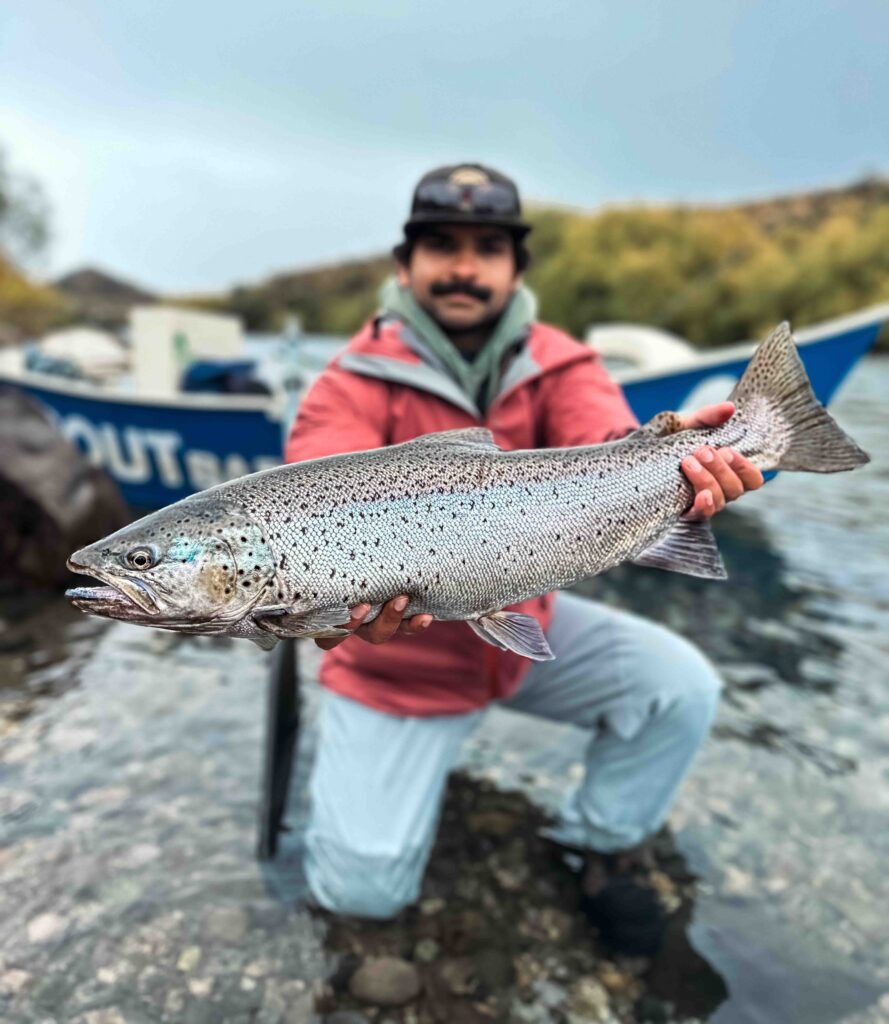
Guide in Bariloche Fly Fishing Exploring the Limay River: a Paradise for Fly Fishing in Bariloche Immerse yourself in fly fishing on the Limay River, just minutes from Bariloche. Clear waters, large trout, and spectacular landscapes await you in this fly fishing Bariloche destination. Bariloche fly fishing, in the Patagonia region of Argentina, is a dream destination for fly fishermen. With its impressive natural environment and an abundant variety of species, it is the perfect place to enjoy this art. Among its aquatic jewels, the Limay River stands out as a paradise for sport fishing. The Limay River, located just 45 minutes from Bariloche’s center, originates at the eastern end of Lake Nahuel Huapi. This mighty, meandering river flows about 500 kilometers in a northeasterly direction, surrounded by willow forests and picturesque rock formations. Its name, which in the Mapuche language means «transparent or limpid», reflects the clarity of its waters, ideal for the reproduction of rainbow trout, brown trout, and brook trout. In addition, it is home to native species such as smallmouth perch, Patagonian silverside, and torrent catfish. The left bank of the Limay, a short distance from the lake, is ideal for fishing for rainbow and brown trout that usually weigh between 700 grams and 2.5 kilos. For fly fishing experts, the area north of the river, up to its confluence with the Traful River, is especially productive. Here, the clear waters allow for fishing for large trout with advanced techniques and specialized equipment. Our Trout Bariloche guides know exactly what it takes; they will share all their knowledge so you can go fishing in Bariloche. To maximize success on the Limay River, it’s essential to have the correct Fly Fishing Bariloche equipment. A 9-foot fast-action rod is recommended, paired with 6- to 8-weight lines. Medium- and fast-sinking lines are a must for varying river depths. Dry flies such as Irresistible and Yellow Humpy are effective, as are streamers such as rabbit and Wolly Bugger. For cold days, a neoprene wader is essential here in Bariloche, and it is always helpful to carry a spare reel and inflatable fishing vests. The casting technique in fly fishing differs from that in other traditional forms of fishing. In conventional fishing, casting involves using a weighted device, such as a sinker or pointer, and throwing it with leverage. However, casting a fly is more complex, since it involves throwing a lure called a «fly» with a very light line, in which the weight is distributed along its entire length. The Steps to Catch Trout Can Be Divided Into: The fly-fishing season in Bariloche on the Limay River runs from November 1 to May 30. It is essential to comply with local regulations in Bariloche to protect fish populations. Catch-and-return fishing is mandatory to sustain the ecosystem. Only lure fishing is permitted, and treble hooks, spinners, and nets are prohibited. Accepted techniques include spinning, fly casting, and trolling. To get to the Limay River from Bariloche, you must go east on Route 237 for 45 minutes to the Corral de Piedra sign. Other popular accesses include Limay Medio in Picún Leufú, 250 km from the center of Bariloche; El Pantanito, 10 km from Picún Leufú; and Auca Cayin, signposted on Route 237 towards Piedra del Águila. The Limay River is a world-class destination for fly fishing here in Bariloche. With its challenging currents, large trout, and spectacular landscapes, it offers an unforgettable Bariloche Fly Fishing experience. Tackling the river with advanced techniques and a focus on conservation allows you to enjoy an adventure that celebrates the connection with nature and the preservation of this invaluable natural resource. If You’re Thinking About Fly Fishing in Bariloche, Do Not Hesitate to Contact Us.
Peculiarities of Fly Fishing in the Limay River, Bariloche
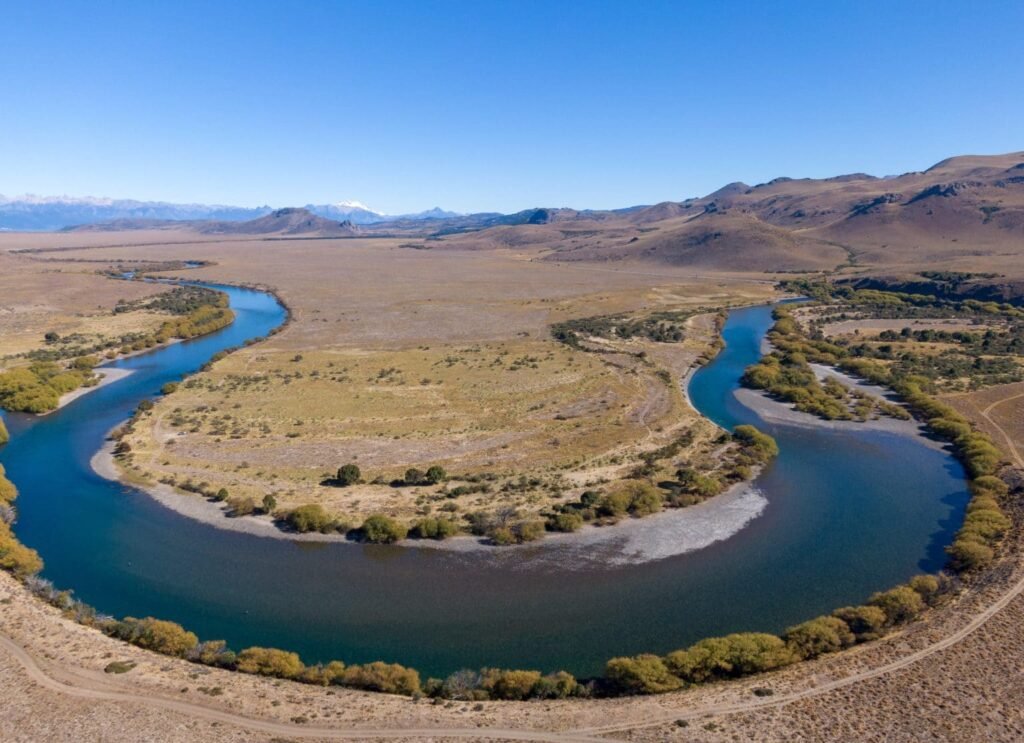
Our Guide Emanuel Tells Us the Most Important Secrets of Fly Fishing in Bariloche Learn some of the best, well-kept secrets about fly fishing from one of Trout Bariloche’s local professional guides to make your fishing adventure a success. In the Limay River in Bariloche, known for its impressive landscapes and crystal clear waters, there are two giant wells: one in Lake Nahuel Huapi and another in the amphitheater. These places are home to migratory trout that seek cold temperatures year-round. Although some trout can rise to the surface in the amphitheater, they are rarely catchable, as they usually use these waters to rest and not to feed. This is why fly fishing in Bariloche is so essential for anglers. The size of the trout in these pools can surprise anyone. It has been documented that trout weighing 18-19 kilos can survive on very little food, while smaller trout weighing 1 kilo are more active and easier to catch. The largest trout recorded in our company weighed 12 kilos, an impressive figure that illustrates the richness of the Limay River. Fishing in Argentina’s Patagonia is exciting. The first well of the Limay River is Lake Nahuel Huapi. That is where the trout are raised, and the brown ones learn to compete with each other and become strong. There are as many trout in Lake Nahuel Huapi as there are salmon in the ocean, but only the strongest and healthiest survive. Geomorphology of Lake Nahuel Huapi, Bariloche, Argentina. Lake Nahuel Huapi in Bariloche has a glacial origin. During the last ice ages, the advance and retreat of glaciers carved deep basins in the rock, giving rise to this impressive lake. With an area of approximately 529 km2, it extends for about 75 km and has a maximum width of 12 km. Its maximum depth reaches 464 meters, making it one of the deepest lakes in South America. The Nahuel Huapi is divided into several basins and bays, such as Bahía de los Troncos, Bahía de San Carlos, and Cuenca Tristeza. These divisions contribute to the lake’s geomorphological diversity, creating distinct aquatic habitats. In addition, it also receives water from numerous rivers and streams that descend from the surrounding mountains. The Limay River is the lake’s main tributary and also serves as a drain, connecting the lake to the Negro River. Other vital rivers in Bariloche that flow into the lake are the Manso and Correntoso Rivers. The geomorphological complexity of Lake Nahuel Huapi creates diverse ideal habitats for a wide variety of fish. The cold, deep waters, along with the bays and tributaries, provide optimal conditions for trout and salmon. This makes the lake a privileged destination for sport fishing, attracting anglers from around the world who seek to enjoy its natural beauty and abundant fish. Here in Bariloche, fly fishing is world-famous. We love welcoming people from other cultures to share our passion for fly fishing. Fly Fishing in the Limay is not just a matter of throwing a line into the water. To reach distances of up to 30 meters, a refined technique is needed. Our Bariloche fly fishing guides are professionals and descendants of generations of Bariloche fishermen. They pass on their knowledge and techniques to new anglers to ensure a successful and sustainable experience. Fishing trips in Patagonia with Trout Bariloche are special; we take care of every detail. The Future of Fishing in the Limay River Our company has a long history of fly fishing in Bariloche, with guides who are the grandchildren of the region’s pioneers. We want the Limay River to remain a top-tier fishing destination, with well-distributed outings and sustainable practices that maintain the ecosystem’s balance. To preserve and improve the quality of fishing, we work to ensure that the Limay River is known for its skilled anglers, not just for the number of boats that navigate it. By understanding and respecting the river’s geomorphology and fauna, we can ensure that future generations will also enjoy recreational fishing in this beautiful place. We prioritize respectful and value-based fly fishing in Argentina. Fishing in the Limay River is more than an activity; It is a tradition that connects people with nature and its history. With dedication and respect for the environment, we will continue to celebrate and preserve this magnificent fly-fishing experience in Argentina’s Patagonia. CONTACT US!
Fly Fishing Bariloche: The Manso River
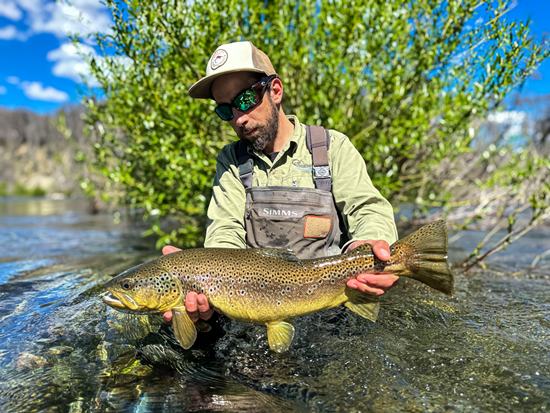
The Manso River, an Excellent Destination for Fly Fishing Fishermen We were lucky enough to be able to interview Emanuel Medina, a fly fishing guide for Trout Bariloche, so that he could tell us about some of his experiences in this exciting field. The Manso River in Bariloche, Patagonia, is a destination known for its excellent fly fishing. With years of experience in these waters, Emanuel shares anecdotes and advice for navigating a constantly changing Bariloche fishing season. Emanuel mentions that during November and December, river water levels are higher, and trout become more aggressive. “At that time, we fish with large flies, looking to irritate the trout so that they attack,” he says. According to him, this type of fishing is particularly well-suited to fly fishing in Bariloche, as it combines sinking and floating lines to increase the chances of success. Three main types of trout can be fly-fished in the rivers and lakes of the Bariloche area: the Rainbow Trout, known for its jumps during the fight; the Brook Trout, which can weigh up to 6 pounds, although it is common to find specimens of 2 or 3 pounds; and the Brown Trout, which Emanuel considers his favorite because of the challenge it represents. However, when summer arrives in Bariloche, trout tend to be less aggressive, making fishing more complex. Emanuel explains that in these conditions, he often chooses to get off the boat and fish from the water, using the wading technique. “It is at these times when we use lighter equipment, ideal for dry fly or Euro nymph,” he comments, highlighting the importance of adapting to the circumstances. Our experienced guides will provide you with incredible Bariloche fishing trips. For Emanuel, beyond the catch, what he enjoys is being on the river, in contact with nature. “It is always a good moment when the trout grabs the fly, but the best thing is being able to be on the river, just being there,” he reflects. With his knowledge of fly fishing on Bariloche’s Manso River and his passion, Emanuel Medina offers each angler who joins him an authentic and enriching fly fishing experience in Bariloche, ideal for those seeking a challenge in a stunning natural setting. CONTACT US!
The Life Cycle of Trout in Bariloche
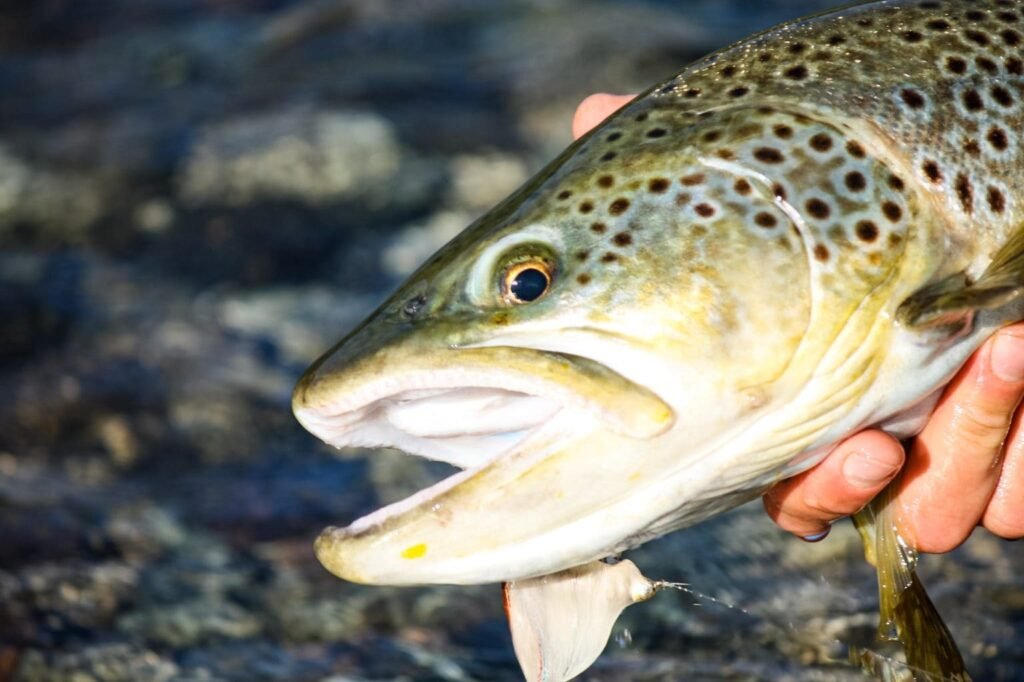
Learn About the «Trout Fishing Argentina» Our Team of Fly Fishing Bariloche Experts is in Charge of Telling You the Underwater Secrets In Bariloche’s Lake Nahuel Huapi, trout compete fiercely with each other, similar to salmon in the ocean. Only the strongest and healthiest trout survive, feeding on the abundant puyenes in the lake. When the trout head to the river mouth to spawn, they show less interest in feeding, making fishing difficult during certain months of the year. During September and October, migrating trout leave the river after laying their eggs, but many remain in the holes, taking advantage of the abundant food and reduced competition. Fishing for these trout requires precision and skill, as they are extremely alert to their surroundings. Our expert fly-fishing guides in Bariloche will be well-versed in these sensitive situations to capture them. They are trout that are very alert and lively to everything that happens around them, which is why the shots have to be very long, and very dynamic flies have to be used in the water and, whether you want to move them from their place or deposit a small fish at the bottom of a slide, the casting technique must be more than satisfactory, to fall exactly two or three meters above the trout, turn the line upwards so that the drift can be corrected and made as natural as possible. This whole “fishing show” is because these trout can go up to grab a fly, but they are not going to grab a fly that looks like a lure since they are more than clever and know how to detect lures that are always in a straight line and never move to the sides. That’s why it’s crucial to experience fishing with Trout Bariloche, as the knowledge provided will provide the correct technique and fly to catch the trout. If we talk about techniques learned through experience and time spent fishing in these waters in Bariloche, what we learned most is that if the trout sees a fly swimming diagonally upward, that’s the best way to get it to bite. Another, more random technique is to strike very long stretches with the fly across the line, confusing the trout. Their environment in the lake also contributes to this confusion. Then, when 4 or 5 quick pulls have already been made, the trout in the waters of Bariloche can also get confused and think that the movement comes from a small salmon, that is, a child of theirs. In this way, they will want to eat it, since it is built into them to eat each other, so that only the strongest survive. Once the trout has laid its eggs and had its «happy ending»—that is, once it has bred—it will move away from that location, and in the first batch of fry, almost none will be eaten, as they are so small that the trout don’t notice them. It’s only in October/November, when these fry reach 3 or 4 cm, that they begin to eat them. For this reason, super-small flies, up to 2 cm, are not helpful for fishing, as they don’t alert the trout. At our company, Trout Bariloche, we historically recommend flies ranging from 4 to 9 cm, as they are ideal. In addition to the famous migratory brown trout in Bariloche’s fishing scene, resident trout are also abundant, reaching an average weight of up to 4 kg. These trout tend to hide in front of rocks, like salmon, as well as in ditches and deep under willows. Luring them away from the shore is practically impossible unless you’re lucky enough to miss a rock with your Spey cast. But if you’re in a boat, it’s much easier, and that’s when we try to use flies with a slightly larger head to move the water a little more. This peculiarity is what drives the resident trout crazy. It’s worth noting that, in most cases, trout eat because they’re hungry, not because they’re attacking. However, very few fish make this much noise in the pools, precisely because they’re trained not to. Therefore, when someone does, it’s because there’s a hunter alert nearby. In this way, the trout activates a state of alert and begins to feel like the owner of the pool, regardless of whose food it is; they see it as their own. This protective action is because trout belong to the salmon family, which enters the ocean in the millions and must compete for food and eat one another to survive. Likewise, Argentine trout fishing becomes very interesting to observe and enjoy at Trout Bariloche. We hope this guide to trout fishing in Bariloche helps you improve your skills. If you have any further questions, please feel free to contact us.