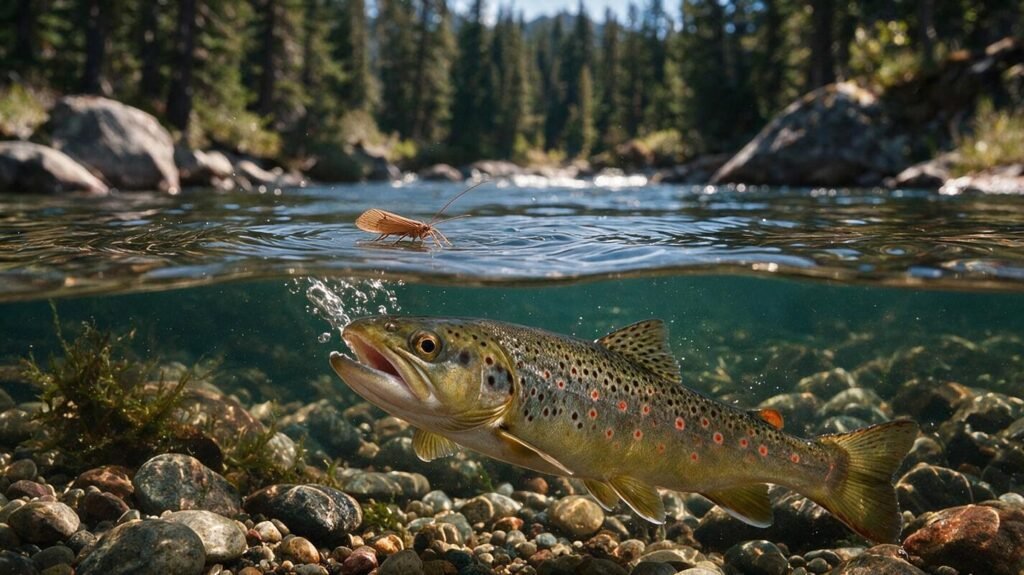
A Local Guide to Trout Fishing in Patagonia
If you are looking for dry fly fishing in Bariloche, there is one thing I would tell you before you start planning your trip: don’t come to Patagonia only thinking about the fish. Come prepared to read the river.
My name is Emanuel Medina, and I am the owner of a fly-fishing company in Argentina and a fly-fishing guide. I have been part of the Patagonian fly fishing world for many seasons, and I am proud to be one of the longest-established guides working in this region.
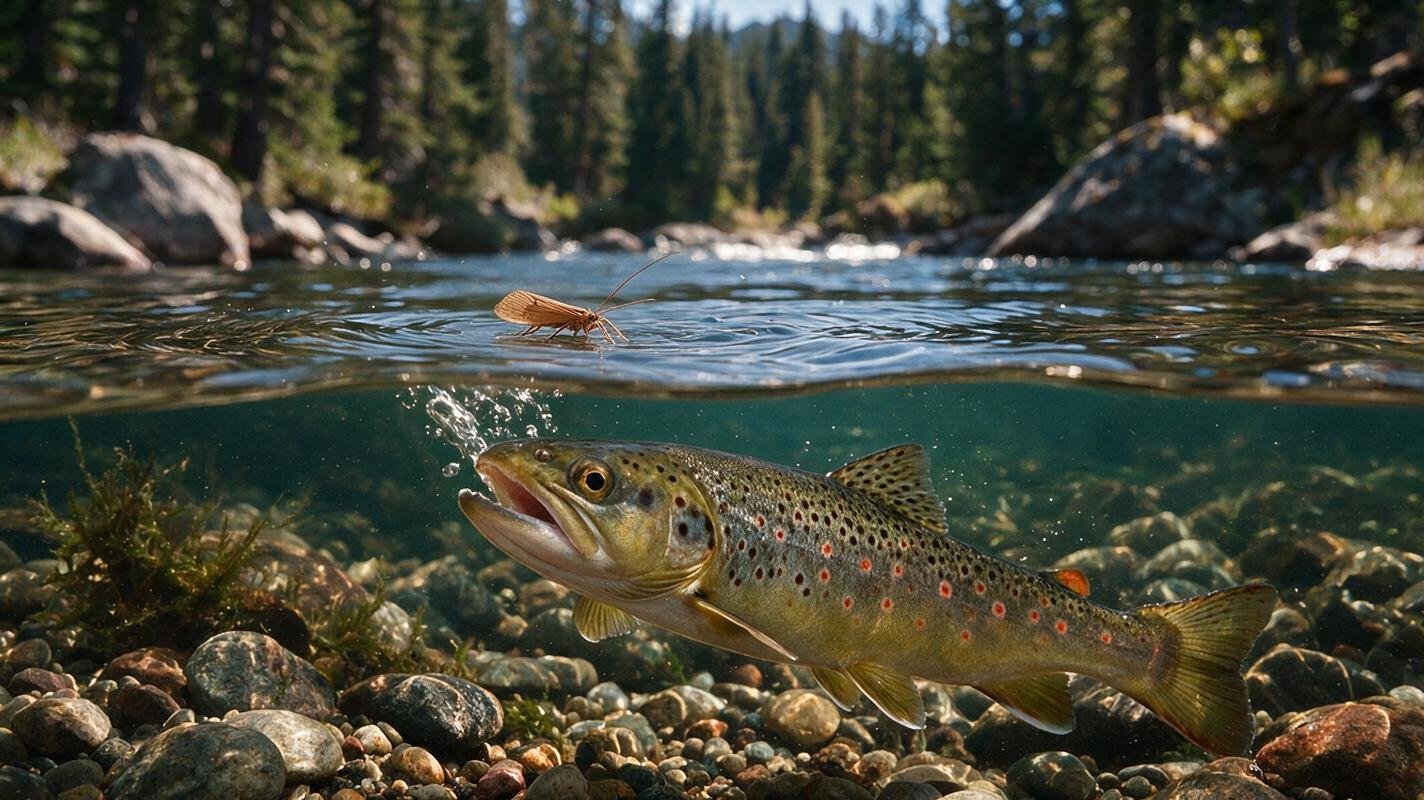
Over the years, I have learned that some of the most memorable days of fly fishing in Bariloche, Argentina are not necessarily the days when you catch the biggest trout. They are the days when you see a few Caddis coming off the water, find a trout feeding in the right place, make the right cast, and watch the fish take your dry fly from the surface.
That is what makes Bariloche fishing so special.
Bariloche offers a remarkable variety of rivers, lakes, landscapes, and fishing situations. But if your goal is specifically to experience dry fly fishing in Patagonia, I pay particular attention to the beginning of the season, especially November and December.
And if I had to choose one river to start with, the Manso River would be very high on my list.
Why Bariloche Is Special for Dry Fly Fishing
There are many reasons anglers travel to Argentina for trout fishing, but Bariloche is particularly interesting because you can experience very different types of water within the same general region.
For me, good Bariloche Argentina fishing is not simply about having access to trout. It is about having different options when conditions change.
One river might be fishing well with a dry fly while another is better suited to a different technique. Water levels, weather, insect activity, light, wind, and fishing pressure can all influence what I decide to do on a particular day.
This is why I don’t like to approach Patagonia with a rigid plan.
When I guide an angler, I want to look at the water first.
Where are the trout holding?
Are they actively feeding?
Are there insects on the surface?
Are the fish looking up?
Is the current allowing a good drift?
These questions are much more important than simply deciding in advance that we are going to fish one particular fly.
That flexibility is one of the great advantages of planning Bariloche fishing trips with someone who knows the rivers and understands how quickly conditions can change.
The Best Time for Dry Fly Fishing in Bariloche
For anglers specifically interested in dry fly fishing in Bariloche, I particularly like the beginning of the season.
In my experience, November and December can offer excellent opportunities, especially when Caddis are abundant. I pay particular attention to the last week of November and the first week of December.
This period can be very interesting for another reason: it is considered low season.
That means fewer anglers on the rivers and, depending on the program and availability, potentially more attractive prices than during the busiest periods.
For me, that combination is difficult to ignore.
You can have active insects, trout looking toward the surface, less pressure on the rivers, and a quieter experience in Patagonia.
November and December: The Caddis Window
Caddis are one of the insects I pay close attention to when guiding during this part of the season.
When Caddis are abundant, the river can change dramatically.
Suddenly, the surface becomes much more interesting. You start looking for subtle rises, movement along the banks, and trout positioning themselves where they can intercept food.
This is when I want to be prepared.
One of the mistakes I see anglers make is carrying only one Caddis pattern.
I prefer having two or three options. You can have a look at www.patagoniatroutandfly.com, my website with fly tying patterns.
One of my favorite patterns is the Goddard Caddis. It is a pattern I have found extremely useful, but I don’t believe in relying on one fly all day simply because it worked yesterday.
The river decides.
The trout decide.
And the angler has to pay attention.
Why Early Season Can Mean Fewer Anglers
One of the things I enjoy about early-season Bariloche fishing is the atmosphere.
You can have an excellent fishing day without feeling that you are competing with dozens of other anglers.
For someone coming all the way to Patagonia, that matters.
You are not only traveling for a trout. You are traveling for the experience of standing beside a Patagonian river, watching the water, making a careful cast, and spending hours away from the noise of everyday life.
That is one reason I often recommend that anglers consider November and December when planning their fly fishing Bariloche Argentina adventure.
What Changes Around January
The beginning of January can still offer good fishing opportunities, but my preference for the specific Caddis-focused dry fly experience described here is the earlier part of the season.
For the Manso, I particularly like the period from November through December and into approximately January 5.
The exact conditions will always depend on the river and the season, so I prefer to plan around what the water is doing rather than promise a particular hatch on a particular date.
The Manso River: My Favorite Water for Dry Fly Fishing
If you ask me about a river that I really like for dry fly fishing, I will talk to you about the Manso River.
The Manso is an incredible river for dry fly fishing.
It is smaller and, in my experience, can be easier to approach than some larger Patagonian rivers. That makes it especially enjoyable when the objective is to cast a dry fly accurately, control the line, and watch what happens on the surface.
For an angler interested in Bariloche fishing trips, the Manso can be a very different experience from simply spending a day on a large river.
You can slow down.
You can walk.
You can observe.
And you can fish.
Why the Manso Works So Well With Dry Flies
The Manso gives you opportunities to concentrate on the details that make dry fly fishing so addictive.
I want to see where the trout are holding before I make a cast.
I want to know what the current is doing.
And I want to understand whether the fish are feeding on the surface or just below it.
This last point is particularly important with Caddis.
I don’t always think of dry fly fishing as simply putting a dry fly on the surface and waiting.
There can be an intermediate level that is incredibly interesting.
Sometimes the fly needs to remain on top. Sometimes a subsurface presentation can produce the response. And sometimes, if a fly sinks slightly, I will let it make a small swing at the end of the drift.
That is the sort of detail that comes from fishing a river repeatedly rather than simply reading about it.
Fishing the Manso From Manso Waters Lodge
One of the best ways to experience the Manso is to stay close to the river.
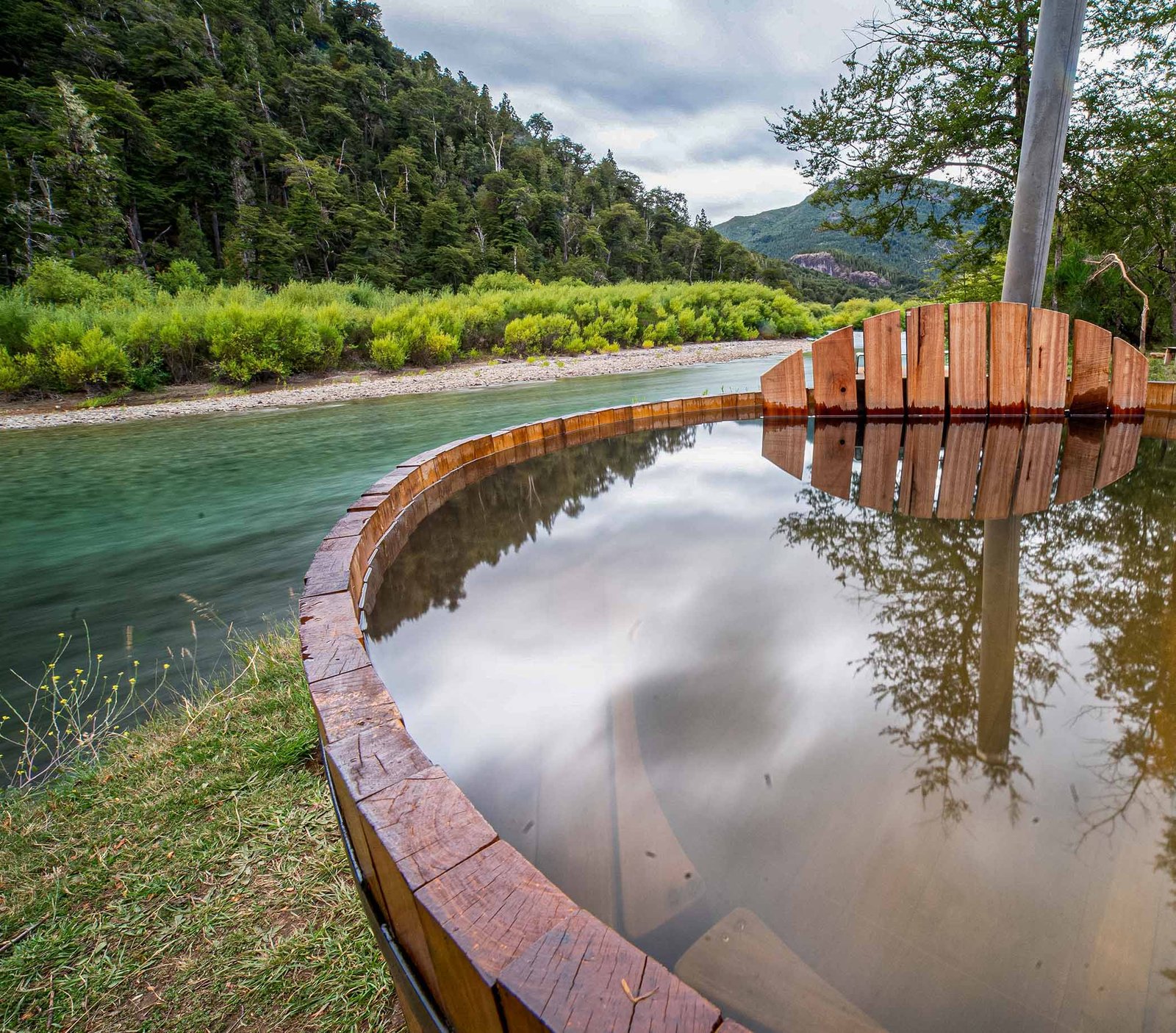
At Manso Waters Lodge, anglers can stay in comfortable, well-equipped yurts right by the river. For someone who wants to combine fishing and a relaxed Patagonia experience, this is a very different proposition from driving back and forth every day.
One of the things I particularly like is the possibility of walking out and fishing on your own.
You can also add guided days to a longer fishing itinerary.
That flexibility works very well for anglers who want a combination of independent fishing and guided fishing.
The lodge experience is not only about fishing.
It is about waking up close to the river, spending time outside, and having the opportunity to fish without making every day feel like a logistical operation.
A Day Trip: Fishing, Empanadas and Argentine Wine
You don’t necessarily need to stay for a full week to experience the Manso.
If you only have one day available, contact us, and we can arrange a day on the river.
And yes, I like to make it a proper Argentine experience.
We can have lunch beside the river with empanadas and red wine, take some time to enjoy the surroundings, and then get back to fishing.
For me, that is part of what makes Bariloche fishing different.
A great fishing day is not measured only by the number of trout you catch.
Sometimes it is the combination of good water, good company, a beautiful place, and a few hours of dry fly fishing that you remember years later.
Other Rivers to Consider for Bariloche Dry Fly Fishing
The Manso is one of my favorites, but it is certainly not the only option.
One of the advantages of fly fishing Bariloche Argentina is having access to different rivers with different characteristics.
Limay River
The Limay River is another important option for anglers coming to Patagonia.
I particularly like thinking about the Limay early in the season and considering how the conditions are developing.
The river is different from the Manso, and that difference is exactly what makes planning Bariloche fishing trips interesting.
Sometimes the right decision is not to fish the river you originally imagined.
It is to fish the river that makes the most sense that day.
Foyel River
The Foyel River is another river I like to consider.
We have private access, and one of the things that makes it interesting is how approachable it can be. You can walk to the river and find opportunities to cast from different banks.
For anglers who want a more intimate river experience, this can be an excellent addition to a Patagonia itinerary.
Choosing the Right River for Your Fishing Trip
This is where I think a local guide can make a real difference.
When you book Bariloche fishing trips, you are not only booking a vehicle, a rod, and somebody who knows how to tie a fly.
You are booking local judgment.
Where should we go tomorrow?
What is happening on the rivers?
Where are the insects?
Where are the trout likely to be feeding?
What water gives us the best chance of achieving what the angler actually wants?
Those decisions are part of guiding.
How I Approach Caddis Fishing in Bariloche
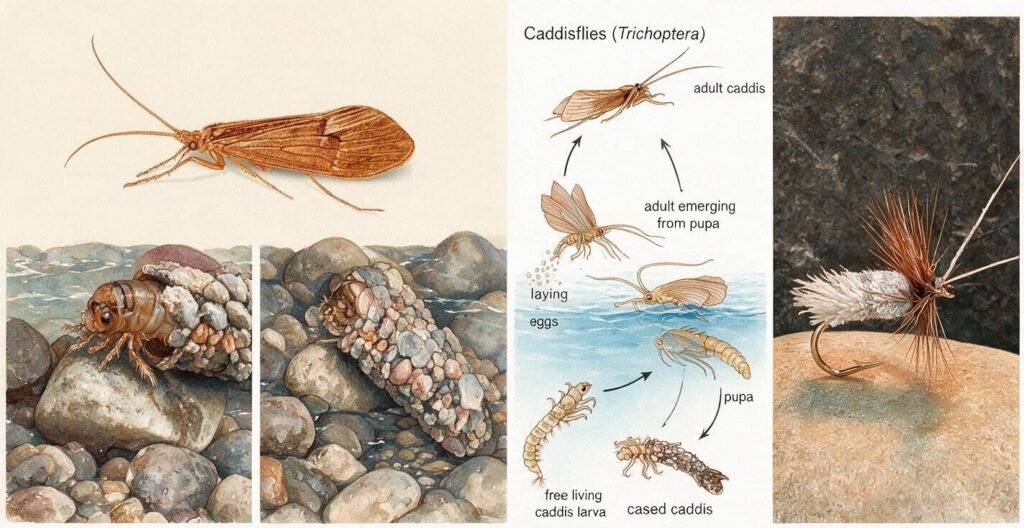
Caddis are one of the reasons I enjoy the early season so much.
When they are abundant, I want to be prepared for a trout that is actively looking for them.
But I don’t want my fly box to contain only one answer.
Don’t Carry Just One Caddis Pattern
If you are coming to Patagonia to fish dry flies, I recommend carrying two or three Caddis patterns rather than depending entirely on one.
My own favorite is the Goddard Caddis, but I would still bring alternatives.
The reason is simple: a trout doesn’t always respond to exactly the same presentation.
The size, color, silhouette, and behavior of your fly can all make a difference.
In Patagonia, I particularly like having a light cream-colored option in approximately size 16 to 18 when conditions call for it.
But the important thing is not to memorize a single fly recipe.
Look at the river.
Look at the insects.
Then make your decision.
Fishing the Surface and the Intermediate Level
There are different levels to consider when fishing Caddis.
The first is the surface.
That is the classic dry fly situation: the trout rises, you see the take, and everything happens in front of you.
But there is also an intermediate level.
A Caddis pattern that sinks slightly can still be effective.
If the fly sinks a little, I don’t necessarily want to immediately retrieve it.
Sometimes I let it make a small swing at the end of the drift.
That can be enough to trigger a trout.
This is one of those techniques that may seem unusual to an angler who has learned dry fly fishing only through modern formulas.
But Bariloche still rewards some of the older approaches to fly fishing.
Dry Fly Fishing Techniques I Use in Bariloche
Dry fly fishing looks simple until you start trying to consistently hook trout.
The fly is floating.
The fish eats it.
You set.
Simple, right?
Not always.
Keep Your Line Under Control
One of the most important things I tell anglers is not to let too much line become completely uncontrolled.
I prefer keeping the line relatively tight so I can react quickly when the trout takes.
This is particularly important with a dry fly.
You may see a fish move toward your fly, but that doesn’t necessarily mean you have a hooked fish.
A trout can take the fly and release it almost immediately.
For me, a real take is when I can tighten the line and feel pressure from the fish on the other end.
That connection matters.
Reading the Take and Setting the Hook
Don’t set simply because you see something happen near your fly.
Watch.
Pay attention.
Then react.
A trout taking a dry fly can produce a splash, a subtle movement, or a small disturbance that is easy to miss.
The better you become at reading the water, the better you become at distinguishing a real take from a fish simply moving near your fly.
The objective is not to make the biggest hook set.
It is to create a clean connection.
When Traditional Techniques Still Work
One of the things I find fascinating about fly fishing in Argentina is that techniques that were developed long ago can still be extremely effective.
Fly fishing today is full of modern equipment, new patterns, and new approaches. But some traditional methods have not disappeared in Patagonia.
Why?
Part of the answer is fishing pressure.
There are waters in Argentina where traditional techniques can still work extremely well because the trout are not exposed to the same constant pressure found in some heavily fished destinations.
I think that is one of the reasons Bariloche Argentina fishing remains so enjoyable.
You don’t always have to reinvent the way you fish.
Sometimes you simply need to understand the river.
Bariloche Fishing Trips: Guided or Independent?
This is one of the first questions anglers ask when they start planning a trip.
My answer is: you can do both.
There are sections of the Manso where you can walk and fish independently, particularly if you are staying close to the river.
But a guided day can completely change how you understand a new river.
A guide can help you identify productive water, improve your presentation, select a fly, manage your line and, perhaps most importantly, avoid spending six hours fishing the wrong water.
For anglers traveling from overseas, this can be particularly valuable.
You may only have a limited number of days in Patagonia.
Why spend those days guessing?
A Day Trip or a Full Fishing Week?
Not every angler wants the same trip.
Some people want a full week of fishing.
Others want to combine fishing with sightseeing, family time, or other activities.
That is why I prefer flexible Bariloche fishing trips.
You can build an itinerary around guided fishing, independent fishing, lodge days, and other experiences.
If your priority is dry fly fishing, I can help you focus the itinerary around the period and waters that make the most sense for that objective.
Why Staying on the Manso Can Change the Experience
Staying beside the river changes your relationship with fishing.
You don’t have to think about the drive every morning.
You can walk to the water.
You can fish for a few hours and return to the lodge.
You can spend a whole day on the river.
Or you can simply sit beside the water and watch.
At Manso Waters Lodge, the yurts give anglers a comfortable base from which to experience the river without giving up the feeling of being in Patagonia.
For me, that combination is one of the strongest reasons to include the Manso in a fly fishing Bariloche Argentina itinerary.
Staying beside the river changes your relationship with fishing.
You don’t have to think about the drive every morning.
You can walk to the water.
You can fish for a few hours and return to the lodge.
You can spend a whole day on the river.
Or you can simply sit beside the water and watch.
At Manso Waters Lodge, the yurts give anglers a comfortable base from which to experience the river without giving up the feeling of being in Patagonia.
For me, that combination is one of the strongest reasons to include the Manso in a fly fishing Bariloche Argentina itinerary.
Planning a Bariloche Fishing Trip Around Dry Flies
If your primary objective is dry fly fishing Bariloche, I would plan the trip around the fishing rather than simply choosing dates based on convenience.
November and December are particularly interesting for the type of Caddis fishing I enjoy.
The last week of November and first week of December can be especially exciting when the Caddis are abundant.
And because this period can fall within low season, it may also provide the additional advantage of fewer anglers and potentially lower costs.
But I always recommend leaving some flexibility in your itinerary.
Weather changes.
Water changes.
Insect activity changes.
And trout certainly don’t read our fishing calendars.
What I Recommend Bringing for Dry Fly Fishing
You don’t need an enormous fly box.
You need the right options.
For Caddis fishing, I prefer carrying several patterns rather than one single fly.
A Goddard Caddis is one of my favorites, and I also like having a few different sizes and colors available.
A cream-colored Caddis around size 16–18 can be a useful option when that is what the natural insects suggest.
The important thing is to observe before choosing.
Don’t arrive at the river, open your box, and immediately tie on your favorite fly.
First look at the water.
What are the trout doing?
What insects are present?
Are fish rising?
Are they taking on the surface or slightly below it?
That information is worth more than any fly selection chart.
Why I Still Love Fly Fishing Bariloche
After so many seasons guiding anglers in Argentina, I still enjoy the moments that make dry fly fishing so simple.
You walk along the river.
You see a trout holding in a seam.
You notice a few Caddis moving through the air.
You make a cast.
The fly lands.
The drift begins.
Then, suddenly, the water moves.
That moment never gets old.
This is why I believe Bariloche fishing is about much more than catching trout.
It is about learning to read the river.
It is about slowing down enough to notice what is happening.
It is about understanding that sometimes the best fishing decision is to change flies, change water, change your presentation, or simply wait.
And it is about experiencing Patagonia with someone who has spent years fishing these waters.
Final Thoughts on Dry Fly Fishing Bariloche
If you are planning a trip to Argentina and specifically want to experience dry fly fishing Bariloche, I would seriously consider the early part of the season.
November and December are particularly interesting for Caddis activity, with the last week of November and first week of December standing out in my experience.
The Manso River is one of my favorite places to concentrate on dry fly fishing because it offers a smaller, more approachable river environment and the opportunity to slow down and really fish.
Limay and Foyel give you additional options, and having several rivers available is one of the great advantages of fly fishing Bariloche Argentina.
But don’t come to Patagonia expecting the fishing to be a checklist.
Come ready to adapt.
Bring several dry fly patterns.
Watch the insects.
Keep your line under control.
Pay attention to the take.
And don’t be afraid to use techniques that may feel old-fashioned.
Some of the oldest ideas in fly fishing still work beautifully here.
If you are planning Bariloche fishing trips and want to build an itinerary around dry fly fishing, the best place to start is by talking about your objectives, the dates you have available, and the type of water you want to fish.
I am Emanuel Medina, owner and fly fishing guide in Argentina, and I would be happy to show you why the rivers around Bariloche have kept me coming back season after season.
Frequently Asked Questions About Dry Fly Fishing Bariloche
What is the best time for dry fly fishing in Bariloche?
For the Caddis-focused dry fly fishing I particularly enjoy, I recommend looking closely at November and December. The last week of November and first week of December can be especially interesting when Caddis are abundant.
Is the Manso River good for dry fly fishing?
Yes. The Manso is one of my favorite rivers for this type of fishing. It is smaller and can be easier to approach, making it a very enjoyable environment for working on dry fly presentation and reading trout.
What dry flies should I bring to Bariloche?
I recommend carrying several options rather than relying on a single pattern. The Goddard Caddis is one of my favorites. I also like having different sizes and colors available, including light cream-colored Caddis patterns around size 16–18 when conditions suggest them.
Can I fish the Manso without a guide?
There are opportunities to walk and fish independently, particularly if you are staying close to the river. However, a guide can help you understand the water, choose the right approach, and make better use of limited fishing time.
Can I combine guided fishing with independent fishing?
Absolutely. This is one of the options I particularly like for anglers staying at Manso Waters Lodge. You can fish independently when you want and add guided days to your itinerary.
Are there other rivers near Bariloche for dry fly fishing?
Yes. Depending on the conditions and your objectives, I also consider rivers such as the Limay and Foyel. Each river offers a different experience, which is one of the advantages of planning a broader Bariloche fishing trip.
Are November and December expensive times to go fishing?
The early season can be considered low season, which may mean fewer anglers and potentially more attractive prices. Exact costs depend on the trip and accommodation selected.
What makes Bariloche different from other Patagonia fishing destinations?
For me, the biggest advantage is variety. You have different rivers, different types of water, and different fishing possibilities within the broader Bariloche region. That allows us to adapt the fishing to the conditions rather than forcing every day to follow the same plan.